
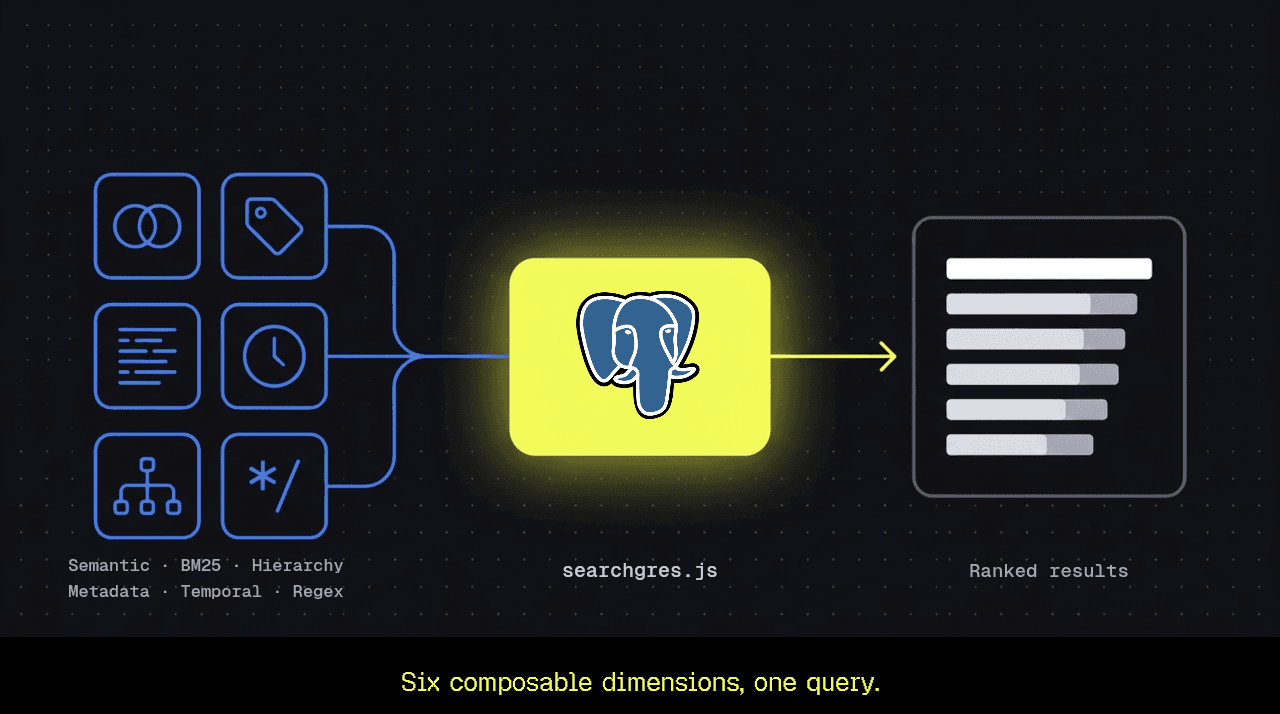
Introducing searchgres.js: Composable Search in PostgreSQL
searchgres.js composes BM25, semantic ranking, and filters for hierarchy, metadata, and time in a single Postgres query. Open-source TypeScript, Apache-2.0.
By John Pruitt
October 20th, 2026

By Rahil Sondhi
June 3rd, 2025
3 min
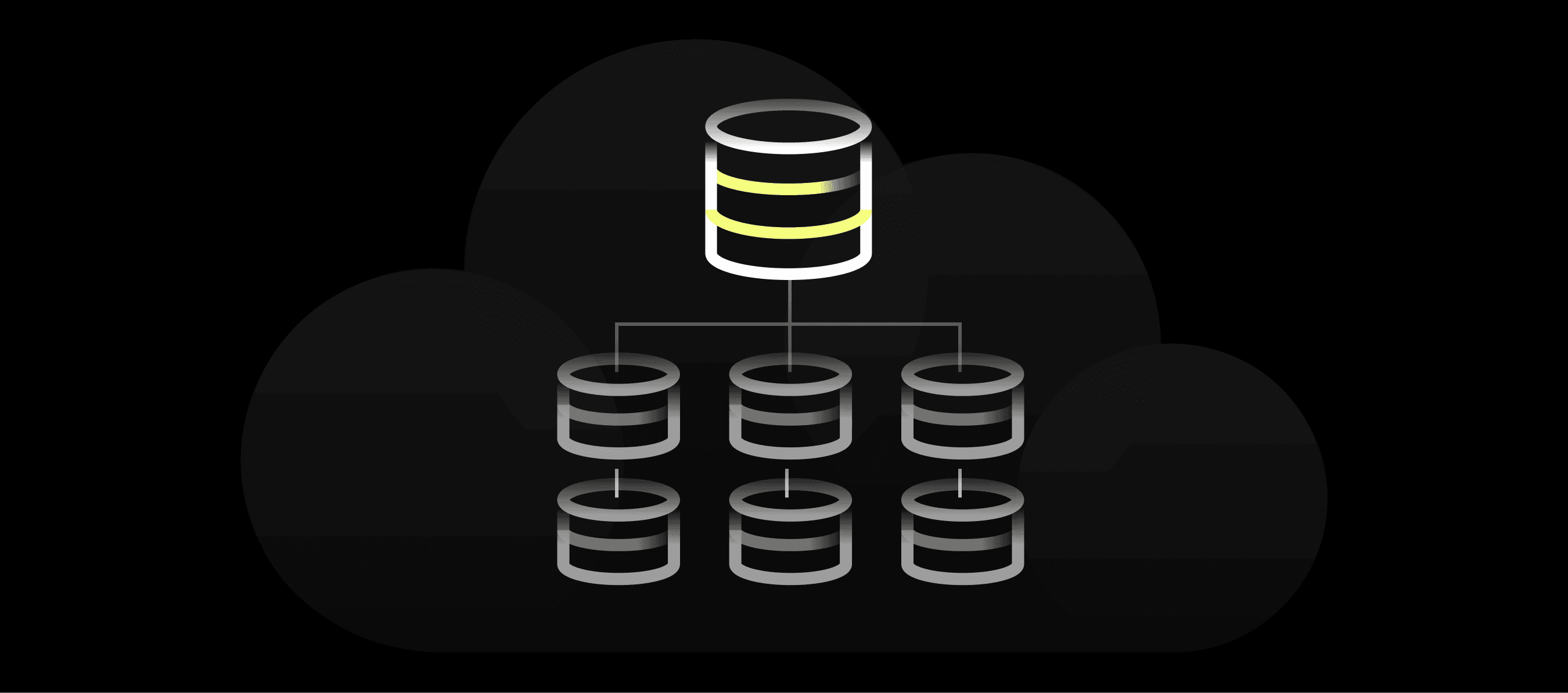
Yesterday, we covered how TimescaleDB 2.20 continues to deliver on our vision of building the fastest Postgres. Continuing on that theme, today we explore how read replicas and enhanced storage enable scaling for modern applications.
Traditional database solutions often struggle in key scenarios:
At Timescale, we believe developers shouldn't have to choose between performance and simplicity. Your database should scale seamlessly with your needs.
That's why we're launching two new features:
With these enhancements, Timescale Cloud empowers users to scale horizontally and vertically, delivering exceptional performance, throughput, and operational simplicity.
Modern applications are read-heavy, but scaling reads typically means dealing with manual setups, custom routing logic, and constant tuning.
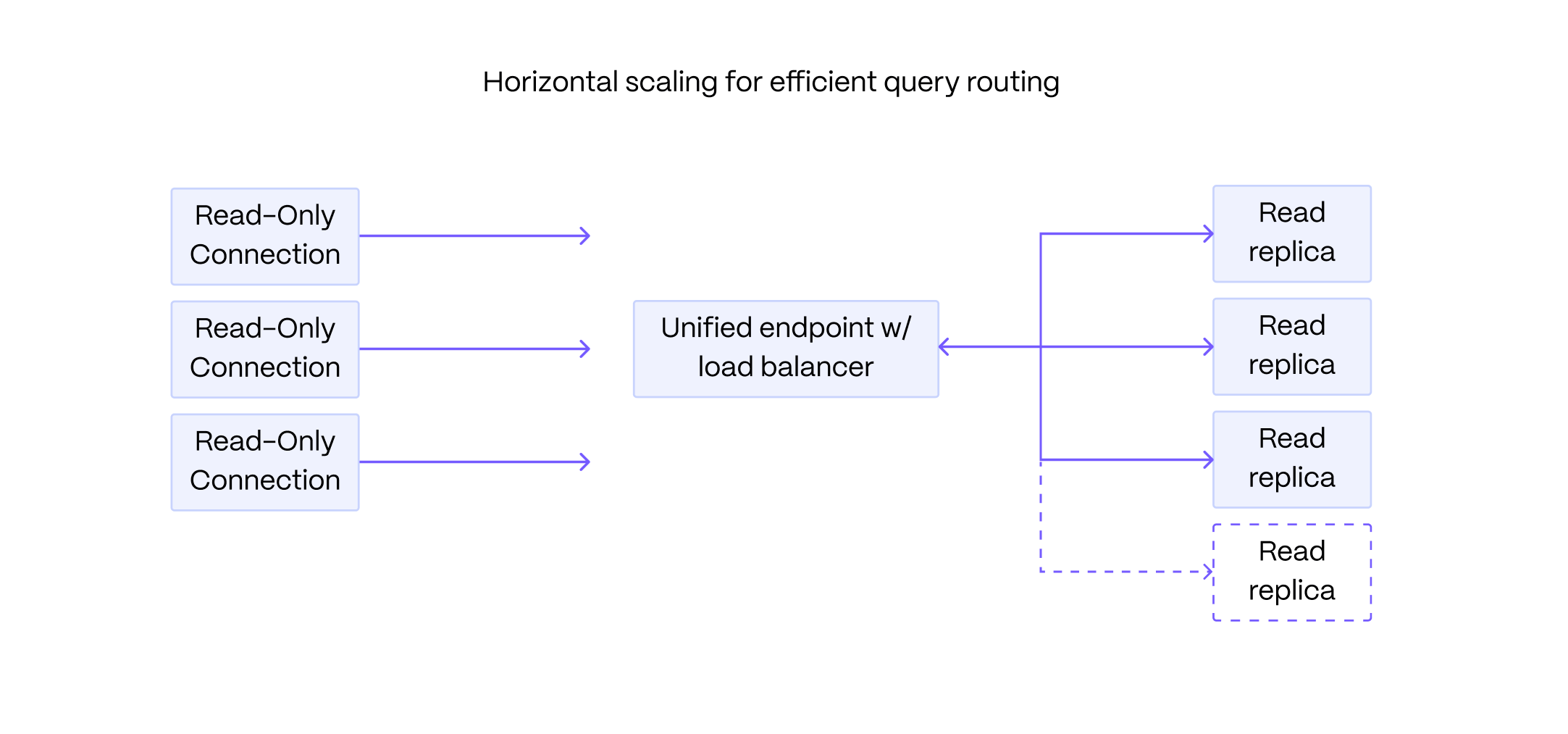
Read replica sets simplify this. Point your application to a single, load-balanced endpoint and let the system automatically distribute read queries across multiple replicas—no app changes required. Using PostgreSQL’s native streaming replication, replicas stay continuously updated without slowing down your primary node.
Read replica sets offer a powerful, flexible solution for managing read-heavy workloads. You can create multiple sets, each tailored to a specific need. For instance, dedicate one set with several replicas to handle high-volume read traffic from your production application, ensuring responsiveness.
Create a separate set for your internal analytics team to isolate their ad-hoc queries and dashboarding activities, preventing impact on production performance.
By directing read traffic to the replica set and write traffic to the primary node, you achieve a clear separation of concerns. This architecture enhances scalability. As your read load fluctuates, you can easily add or remove replica nodes within a set via the Timescale console, adjusting capacity without disrupting your application or requiring manual changes. This consolidation behind a single, load-balanced endpoint simplifies your architecture while scaling read throughput.
Existing read replicas have been automatically upgraded to read replica sets with one node. Price remains the same.
But there’s more. For customers with growing datasets and demanding analytical workloads, the previous 16 TB storage ceiling was becoming a constraint. That’s changing.
We're launching a new storage type called enhanced storage, powered by AWS EBS io2 volumes. This new type increases both storage capacity and throughput, making it ideal for customers with mission-critical workloads.
You can now scale your Timescale Cloud service:
You can switch to enhanced storage in the console without any downtime. This new storage type will initially be available to Enterprise customers and is part of our broader investment in serving high-scale, mission-critical applications.
This is a major step forward for demanding workloads with high ingestion rates, large query volumes, and complex analytics, such as financial data pipelines, IoT platforms, and telemetry processing.
These two new features are part of our broader vision: to make Timescale Cloud the most powerful and developer-friendly database for demanding applications.
With read replica sets and enhanced storage, Timescale Cloud delivers the speed and scalability needed for the most demanding workloads, while preserving the simplicity and power of Postgres.
Next up: database observability simplified with Timescale Cloud.
// Related posts
searchgres.js composes BM25, semantic ranking, and filters for hierarchy, metadata, and time in a single Postgres query. Open-source TypeScript, Apache-2.0.
By John Pruitt
October 20th, 2026
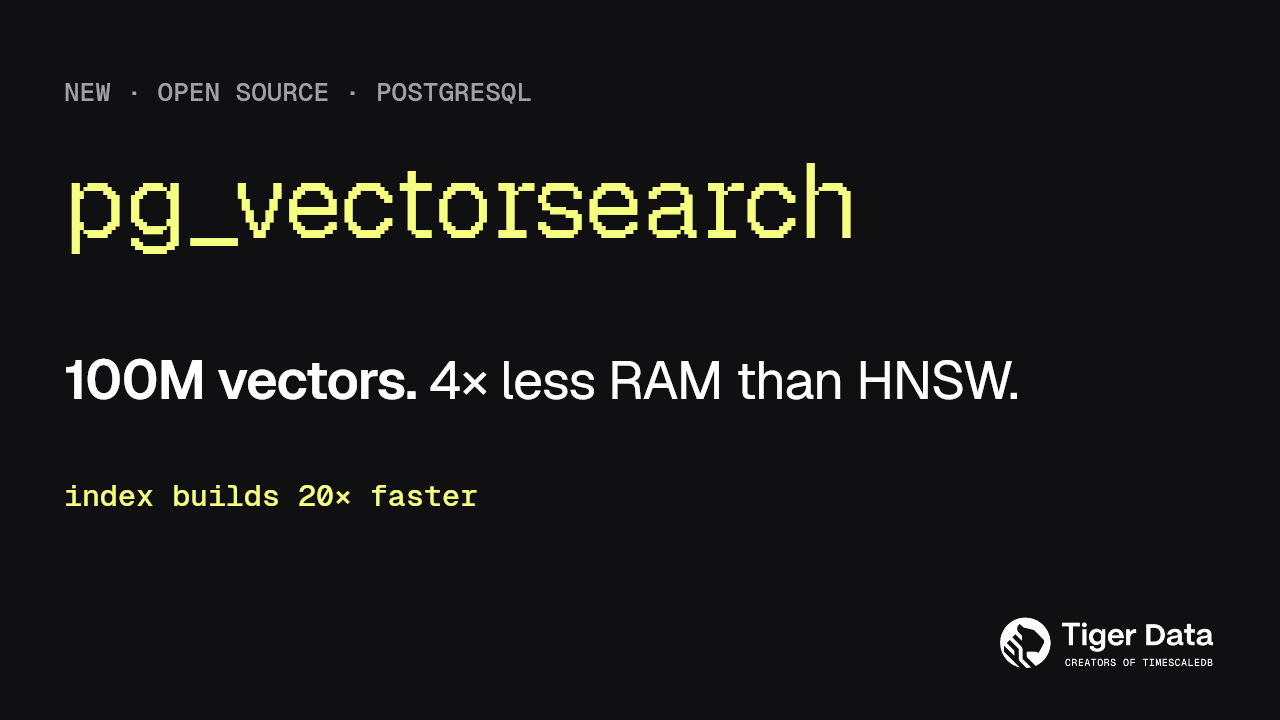
pg_vectorsearch is a new open-source Postgres extension. Its PRISM index serves 100M vectors in 6 ms on 4x less RAM than HNSW, with builds in under 2 hours.
By Erik Nordström
October 13th, 2026
TimescaleDB 2.28 adds schema evolution for continuous aggregates, lighter refreshes, faster compressed queries, and ends PostgreSQL 15 support.
By Nicole Ghalwash
July 29th, 2026
Receive the latest technical articles and release notes in your inbox.