

Keep scaling PostgreSQL with Tiger Data compression
5x reduction in storage footprint, up to 1000x faster analytics queries
A solution to store more data in smaller disks. Achieve +90% compression rates and get millisecond performance for your analytical queries—even when your tables reach billions of rows.
 Learn about Tiger Data compression
“For one of our larger customers, we normally store about 64 GB of uncompressed data per day. With compression, we’ve seen, on average, a 97 percent reduction.”
From the Dev Q&A with Michael Gagliardo, Software Architect at Ndustrial.io
See how Glooko achieved 95-97% compression on 3 billion monthly data pointsReduce your PostgreSQL database storage size
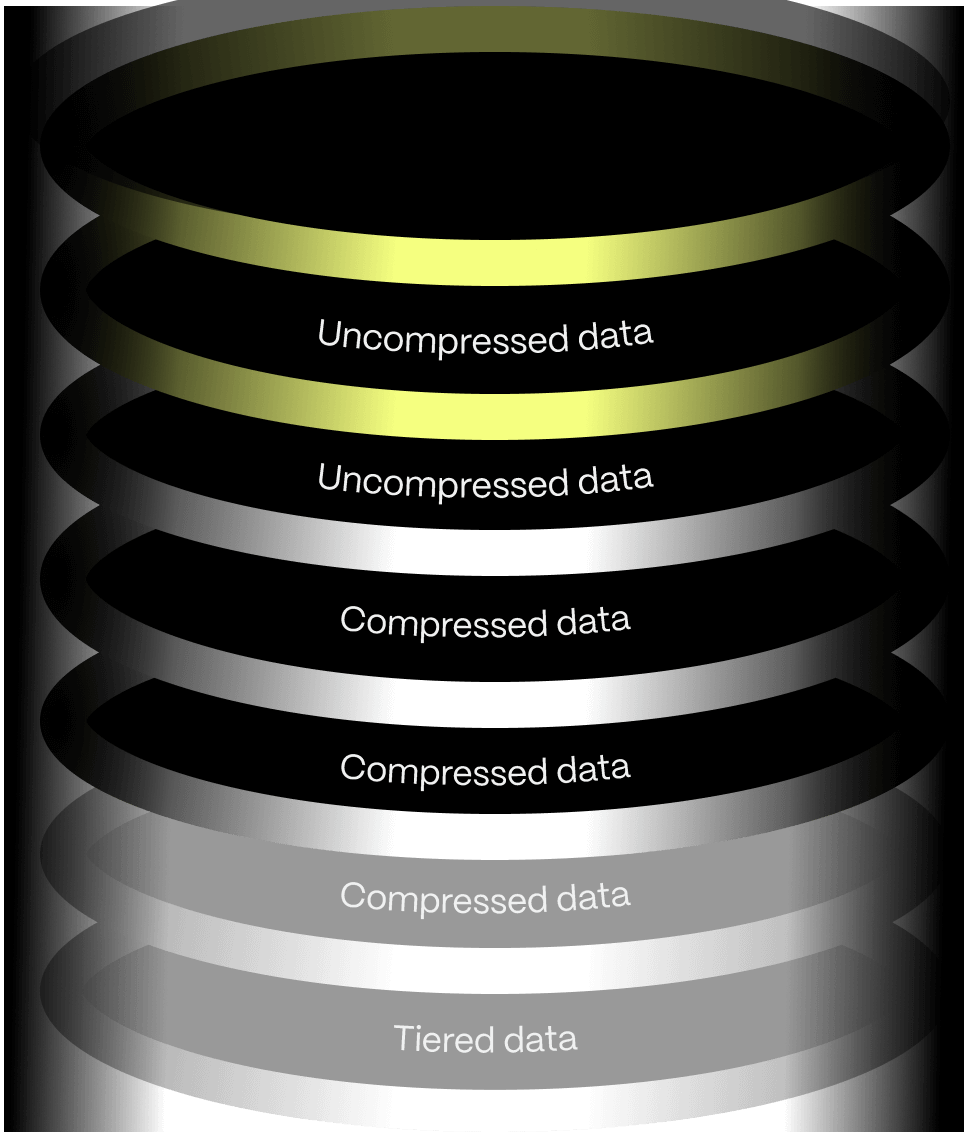
Tiger Data compression achieves unparalleled compression rates in PostgreSQL by combining an innovative columnar compression design with type-specific compression algorithms. Experience compression rates of +90% and immediately shrink your PostgreSQL storage requirements.


Speed up your analytical queries
Thanks to its columnar storage design, Tiger Data compression improves the speed of your analytical queries looking at aggregated values (deep-and-narrow). They’ll stay at milliseconds even when looking at billions of rows.
-- Show max value for specified time frame

SELECT max(fare_amount)
FROM demo.yellow_compressed_ht
WHERE
    tpep_pickup_datetime >= ‘2019-09-01’ AND
    tpep_pickup_datetime <= ‘2019-09-01’;

max
---------
150998.39
(1 row)

-- Time before compression: 4.7 s
-- Time after compression: 77.1 msPay less for storage as your data ages
Leverage Tiered Storage in the Tiger Data platform to increase your storage savings the more your data grows. Once your data becomes older and infrequently accessed, tier it to our low-cost storage built on S3 and keep all your historical data in your database for a fraction of the cost.
Learn more about tiered storage
Try Tiger Data compression in 4 quick steps

Success!
Enjoy your 5x increase in storage space and
cost reduction
For an example of what this looks like in action, check out our docs page on how energy companies set up their time-series database.